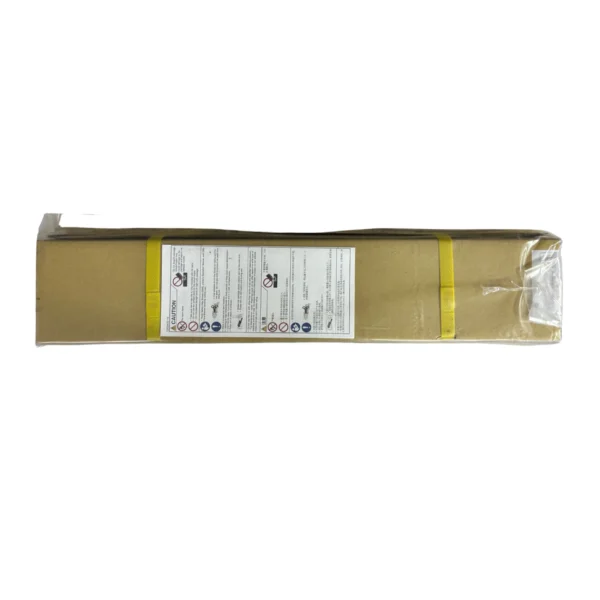
Mimaki DTF Inks

Mimaki PHT50 : Heat Transfer Pigment Ink — DTF Exclusive Use
Mimaki’s First DTF-Specific Ink | CMYK + White | Aluminium Pack Degassed Design | OEKO-TEX Certified
OVERVIEW
Mimaki PHT50 is Mimaki’s first ink developed specifically and exclusively for DTF (Direct to Film) printing — a dedicated heat transfer pigment ink engineered to print directly on a DTF-specific PET film, which is then hot-melt powdered and heat-treated to create a sheet layer ready for transfer onto virtually any fabric. Unlike sublimation inks which require polyester substrates, PHT50 enables full-color decoration on cotton, poly-cotton blends, nylon, and dark-colored garments — opening the full range of fashion apparel and custom garment decoration to Mimaki’s industrial DTF printing technology. Carrying OEKO-TEX ECO PASSPORT certification (Certificate No. NEP 2212), PHT50 meets the textile safety requirements of international fashion brands and garment retailers with formal Restricted Substance Lists. PHT50 is supplied through Insight Within for all Mimaki TxF series DTF printer owners across India.


Categories: , Brand:

Get a Quote

Submit the below form and our team will get back to you

    Description

    • Degassed Aluminium Pack Design — Stable, Defect-Free Printing
      PHT50 ink is supplied in aluminium pack packaging with a degassed ink formulation — a design specifically engineered to prevent ink ejection defects. Dissolved air in ink is a primary cause of unstable droplet formation, missing dots, and head clogging in piezo inkjet print heads. The degassing process removes dissolved air before the ink is sealed in the aluminium pack, ensuring stable, consistent printing from the first drop to the last.
    • White Ink — The Foundation of All-Fabric Decoration
      The White (W) channel in PHT50 is the critical difference between DTF printing and sublimation printing. White ink creates an opaque underbase that allows CMYK colors to appear accurately on dark, colored, or non-white fabric — exactly as they were designed. Without a white underbase, dark fabrics would absorb or show through the color inks, making accurate color reproduction impossible. PHT50’s white ink channel is supplied in a dedicated 500 ml pack, separate from the 600 ml CMYK packs, reflecting the higher consumption rate of white ink in DTF production.
    • CMYK Color Channels — Vibrant, Accurate Color on Any Fabric
      The PHT50 CMYK color inks are formulated as heat transfer pigment inks — waterproof, wash-resistant, and flexible on fabric after heat pressing. The combination of white underbase and CMYK overprint enables full photographic color reproduction on cotton, poly-cotton, nylon, polyester, and any other fabric type — achieving results that sublimation printing cannot match on non-polyester substrates.
    • Differentiated Ink Pack Sizes — C/M/Y/K vs. White
      PHT50 is supplied in two pack sizes reflecting actual DTF production consumption ratios: C/M/Y/K at 600 ml each, and White (W) at 500 ml. This differentiation reflects the higher relative consumption of white ink in standard DTF workflows where white is printed at higher density as a full underbase, while CMYK colors are printed at design-specific coverage.
    • OEKO-TEX ECO PASSPORT Certified — Certificate No. NEP 2212
      PHT50 carries OEKO-TEX ECO PASSPORT certification (Certificate No. NEP 2212), certified through Nissenken Quality Evaluation Center in Japan. The certification confirms that every component of the PHT50 formulation has been assessed against OEKO-TEX’s restricted substance lists — covering human health, environmental compliance, and regulatory requirements across all ink channels including the white pigment. This is required by international fashion brands and textile retailers with formal Restricted Substances List (RSL) compliance programmes.
    • Mimaki’s First DTF-Specific Ink — Purpose-Built Engineering
      PHT50 is explicitly positioned as Mimaki’s first ink developed exclusively for DTF use — distinguishing it from general-purpose or adapted inks used in some DTF systems. Purpose-built formulation means the ink chemistry, viscosity, surface tension, and drying profile are all optimised for the DTF film printing process and the TxF series print heads, rather than being adapted from another application.

    Related Products